Lighting system for camera
An endoscope contains an internal light source, usually LEDs or halogen lamps transmitted via fiber optics, which provide necessary illumination to light up dark areas inside the body, making internal tissues visible.
Imaging sensor system
The top of the endoscope is equipped with a set of lens systems that can focus and magnify the image of internal tissues. Depending on the design and requirements, an endoscope can be fitted with a single lens, double lenses, or a complex zoom system. there is a digital camera sensor behind the lens to remap the real world to digital world.
Lighting and sensor control system
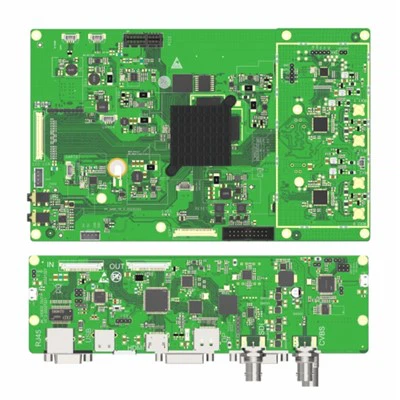
In order to control the lighting system and the imaging sensor system, there is a control board behind the lighting system and the image sensors, normally the camera sensor connect to the control system board with the MIPI CSI interface, the control system can adjust the lighting strength and the camera sensors parameters, or process the datas from the camera sensors, and then conveying to next stage.
Transmission unit of video and image
After imaging, the image and video datas are transfer to control system board , at this stage , we will transfer the data with a common interface- USB interface, the USB interface is a popular driver free interface for many devices, such as computer, mobile phone, with the USB interface, the captured video and image are easy to hand over to the powerful display device and data analysis device, for more convenient to the other end of the endoscope.
Endoscope camera central processing unit
Finally, the optical signal is converted into an electrical signal and captured by a camera or other sensors, transmitted to a display screen, allowing doctors to observe the internal conditions in real-time through a monitor.