Optical System: Lenses and Fiber Optics
The optical system is at the heart of the medical endoscope. Modern devices rely on glass lenses and bundles of optical fibers to transmit light and images with minimal distortion. This ensures a clear, magnified, and well-focused view of the targeted area.
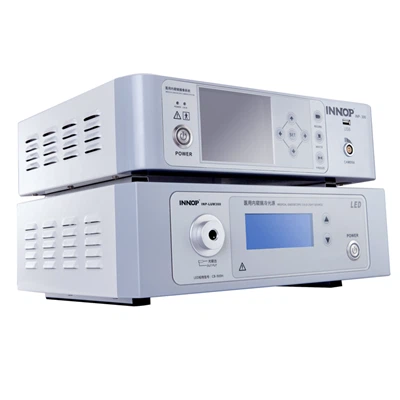
Light Source and Illumination
Since body cavities are dark, illumination is crucial. Medical endoscopes use LED or Xenon light sources, transmitted via fiber optic cables, to brighten the surgical field. The illumination intensity can be adjusted to avoid glare or overheating.
Insertion Tube and Flexibility
The long, slender insertion tube is designed to navigate through narrow and delicate pathways inside the body. Flexible models are coated with biocompatible materials, allowing smooth movement without damaging tissues.
Control Handle and Operational Buttons
The control section contains valves, buttons, and angulation controls, enabling physicians to maneuver the tip of the scope, regulate suction, and capture images or videos during the procedure.
Imaging Sensor and Camera Module
At the distal tip, a CCD (Charge-Coupled Device) or CMOS (Complementary Metal-Oxide-Semiconductor) sensor converts optical images into electronic signals. These sensors are responsible for the clarity, resolution, and color accuracy of the captured visuals.
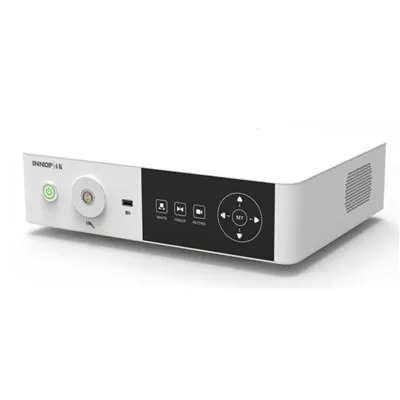
Video Processing Unit (CCU)
The camera control unit (CCU) processes signals from the imaging sensor. It adjusts parameters like brightness, contrast, and white balance before transmitting them to the monitor.
Display Monitor and Output Interfaces
Endoscopic images are displayed on high-definition medical monitors that support real-time viewing. Output ports allow images and videos to be stored for documentation, research, or patient records.